The opportunity
Authentic Punjab,
engineered to scale.
Kobabi Bites is building India’s trusted Punjabi QSR — real recipes, made once at a central facility and served everywhere, on a model proven in the cities the big chains ignore.
Everyone loves Punjabi food. Nobody has scaled it properly.
Across India and abroad, people crave the bold, smoky flavours of traditional Punjabi cooking — but what they get is inconsistent, simplified, and rarely from a brand they can trust twice.
- 01
Mass-market brands miss the real thing. National and global QSRs rely on generic, over-simplified recipes that lose the true taste of Punjab.
- 02
Consistency is the weak point. Even where Punjabi food exists, taste, texture and experience vary drastically from place to place.
- 03
Kitchen recipes don’t scale. There’s a wide gap between a traditional Punjabi kitchen and producing that food at volume, with quality and hygiene.
- 04
The category has no owner. Punjabi food is loved everywhere, yet lacks a globally recognised, scalable brand — an ethnic ready-to-eat market heading for USD 4.5 billion by 2027.
One central kitchen. Authentic taste, made repeatable.
Kobabi Bites brings the authentic taste of Punjab to every plate — with consistency, convenience and scale.
- →
100% authentic recipes. Tandoori snacks and traditional gravies crafted in-house from recipes passed down through generations.
- →
Made at our own facility in Ludhiana. Centralised production gives unmatched control over taste, hygiene and scalability.
- →
Hero products that already sell. Lemon Champ (a zesty vegetarian tandoori delight) and Lahsooni Tikka (garlic-marinated chicken) anchor a menu built for mass appeal.
A large, fast-growing market — and Kobabi’s segment is where it’s heading.
The demand for authentic Indian food is exploding, and QSR plus cloud-kitchen formats are how it will be delivered at scale.
- $95BIndia’s food-service market, projected by 2025Industry estimates
- $4.5BIndian ethnic ready-to-eat market by 2027Market Research Future
- 4thMost popular ethnic cuisine worldwide — strong in the UK, Canada, Middle East & USA
- 2 & 3The Tier 2 & Tier 3 cities rapidly embracing branded food experiences
The shift is toward exactly what we build.
Fast Food and QSR are projected to make up roughly two-thirds of India’s food-services market — while full-service restaurants shrink as a share. Kobabi sits at the intersection of rising demand, operational scalability and the untapped potential of Punjabi cuisine.
Frozen and pre-prepared manufacturing, QSRs, cloud kitchens and B2B supply are all channels our central-kitchen model is already built to serve.
Strong ground-level momentum, on scalable infrastructure.
This isn’t a concept. It’s an operating business with real outlets, real revenue and a supply chain built to replicate.
- 4Company outlets trading across Punjab — Machhiwara Sahib, Talwara, Mohali, Nawanshahr — with Vardhaman Estate, Ludhiana launching soon
- ₹5L+Average monthly revenue per Tier-3 outlet, on strong, lean unit economics
- 1Fully functional in-house manufacturing facility in Ludhiana, built for high-volume consistency
- 5Cities already enquiring about franchises — Patiala, Doraha, Khanna, Pune, Jammu
Top-performing SKUs — Lemon Champ, Lahsooni Tikka, Slow Roasted Chicken and the signature gravies — drive both volume and repeat footfall, and every location is highly rated on Google. Growth so far has been organic, on authentic taste, value-for-money and consistent quality.
Centralised production, distributed sales.
A modular, repeatable model designed to scale across cities — with full control over quality and customer experience. Products are made at the Ludhiana facility and distributed to company-owned and franchise outlets, keeping taste identical everywhere.
- Revenue stream 01
F&B sales
The primary income — walk-in, takeaway and dine-in across company-owned QSR outlets in Tier 2 & Tier 3 cities.
- Revenue stream 02
Internal distribution
Product supplied from the central kitchen to every outlet, keeping food costs low and margins consistent.
- Revenue stream 03
Franchise & margin share
A growing vertical — franchise fees plus margin on supply, with SOPs and backend already in place for clean replication.
Cost-effective centralised prep keeps food costs low, a standardised menu improves outlet efficiency, and hero SKUs drive both volume and profitability. Cloud kitchens are a planned, asset-light, high-margin future channel.
Not just another food brand.
Kobabi brings together authenticity, scalability and a format suited to India’s next wave of food consumers.
True Punjabi authenticity
Recipes rooted in Punjabi culinary tradition; every spice blend, marinade and gravy developed in-house, preserving authenticity with every batch.
Centralised production model
Our Ludhiana unit handles end-to-end manufacturing. A frozen, pre-prepared supply chain cuts in-outlet prep time and enables high-quality replication.
Strategic Tier 2 & 3 focus
Major chains ignore smaller cities — we don’t. We’ve proven demand there, filling a real gap for branded, authentic Indian food.
Balanced, franchise-ready menu
High-repeat staples, top-selling tandoori snacks and QSR hits widen appeal and order value — and SOPs, supply chain and packaging are ready for rollout.
A staged path to a national brand.
-
Short term · 6–12 months
Deepen the base
- Launch own stores in Tier 2/3 cities
- Focus on high-footfall locations
- Trendy & local menu innovation
- Prepare the backend for franchising
-
Mid term · 12–24 months
Build the engine
- Onboard franchise partners in key cities
- Set up training & supply systems
- Plan cold-storage hubs
- Launch new and limited food items
-
Long term · 24–36 months
Scale nationally
- Reach 100+ total outlets
- Expand via metro franchise clusters
- Start a B2B gravy & tandoori line
- Launch a frozen / D2C product range
The vision: 100+ outlets in three years, and India’s trusted Punjabi QSR.
Founder-led, across product, people and process.
Built from scratch, hands-on — no external agency behind the brand. Three founders cover the three things that make a food business scale.
-
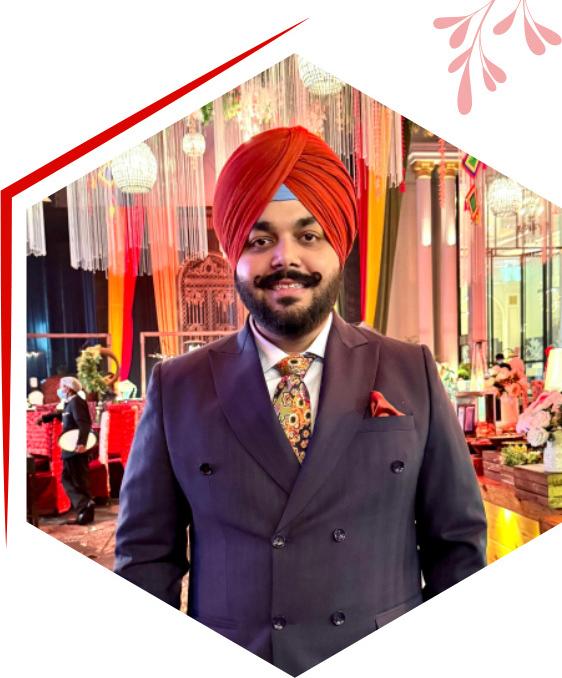
Nayandeep Komal
Co-Founder & Brand Head
Sales, growth strategy and multi-location operations — the force behind the brand’s identity, expansion and outlet performance.
-
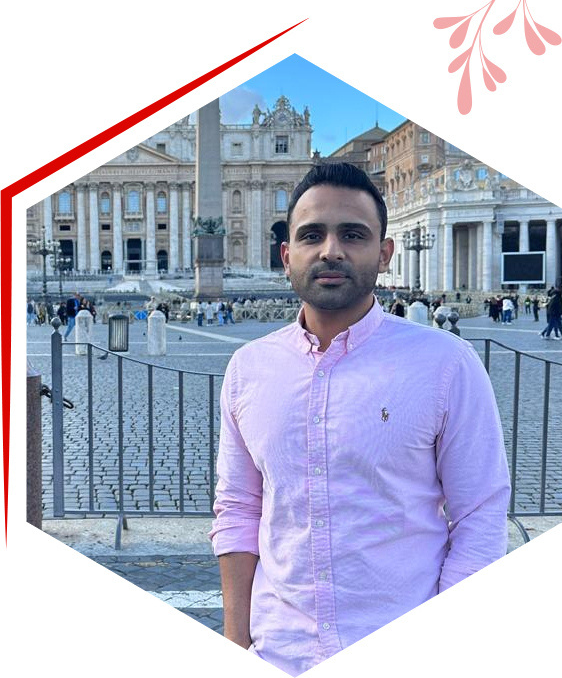
Jaspreet Benipal
Co-Founder & Operations Lead
Outlet execution, ground teams and SOPs — the backbone of day-to-day operations, with a track record of launching and stabilising Tier-3 outlets.
-
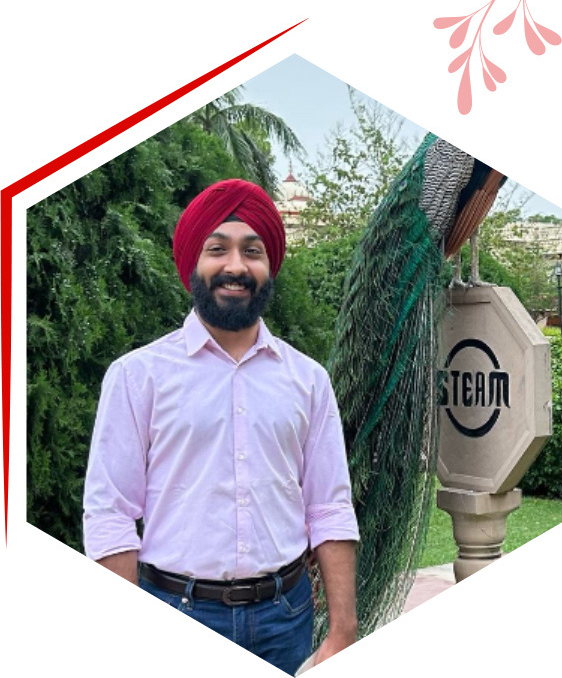
Simardeep Bhalla
Co-Founder & Head Chef
Menu engineering, food manufacturing and product innovation. Holds a degree in Culinary Arts (Food Science & Microbiology) from London; architect of the signature recipes and SKU consistency.
Join us in building India’s Punjabi QSR.
We’re speaking with partners who see what we see: a loved cuisine, a proven model, and the whitespace to build the brand that owns it. For a detailed conversation and the full investor pack, reach out directly — we’ll take it from there.